The Connection to Rose Dhu Plantation
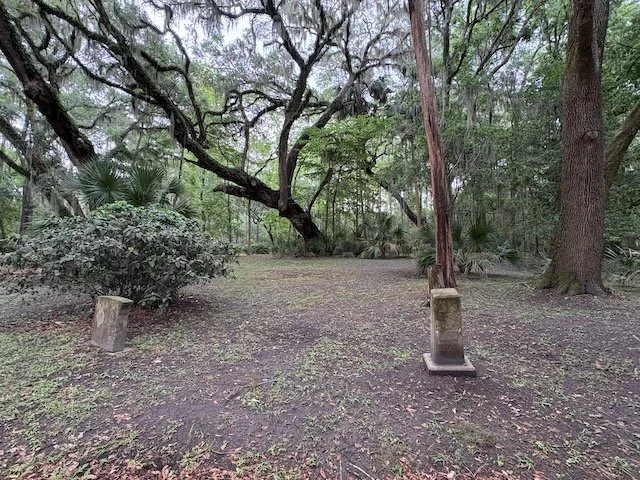
Rose Dhu Cemetery, located in our common area, is not just a collection of headstones; it is a physical ledger of the transition from the antebellum plantation economy to the self-sustaining Gullah-Geechee communities that defined Bluffton after the Civil War.
The area encompassing May River Plantation and the Rose Dhu tract is one of the most historically dense pockets of Beaufort County. It represents a vital link in the Lowcountry’s transition from a plantation-based economy to an independent Gullah-Geechee cultural stronghold. Historically associated with the Lawton family—notably Joseph James Lawton—the plantation was a productive landscape of timber, cotton, and local sustenance.
The geography of the site, with its proximity to tidal creeks, made it a strategic location for early settlement. The name "Rose Dhu" likely reflects the Scots-Gaelic heritage of early settlers in the region, meaning "Black Rose" or "Dark Rose," common in the naming conventions of the 18th and 19th centuries.
Rose Dhu was never as famous as the giant rice empires of the Combahee River, but it was a vital part of the May River "Inland" economy. Originally part of a massive land grant system, Rose Dhu was a working plantation that leveraged the unique geography of the Rose Dhu Creek and the May River. While many nearby plantations focused on "Sea Island Cotton," the muddy banks of the creek were also suitable for smaller-scale rice cultivation and indigo in the earlier years.
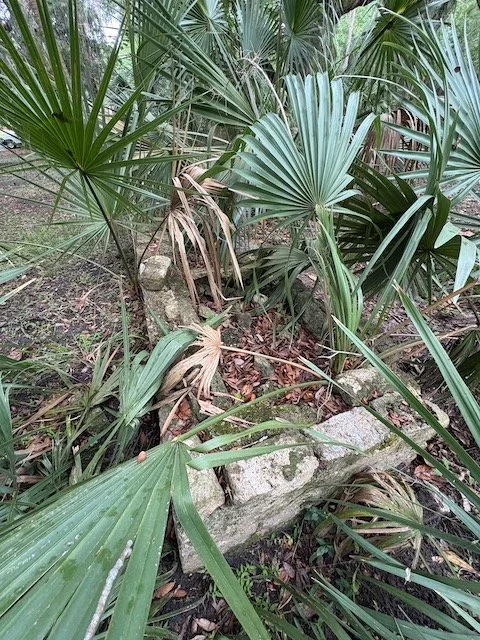
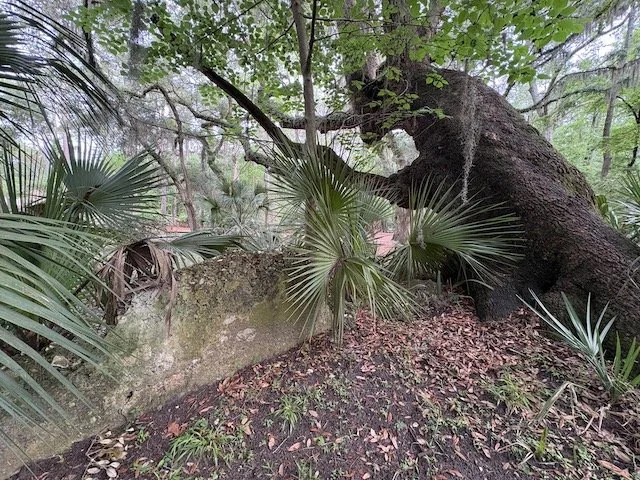
The Tabby Enclosure: The Colonial Foundation
The tabby ruins represent the Plantation Era (c. 1790–1860). Tabby, composed of burned oyster shells (lime), sand, and water, was the primary building material for the wealthy elite of Beaufort County. The presence of block-outlined graves inside these ruins identifies this as the Planter’s Sanctuary. Historically, these would have contained the families of early owners such as the Lawtons or Kirks. The fact that the stones are missing today is a common regional tragedy; many marble box-tombs were scavenged during the lean years of the late 19th century or destroyed by the elements.
The People Of The May River (1896 - 1966)
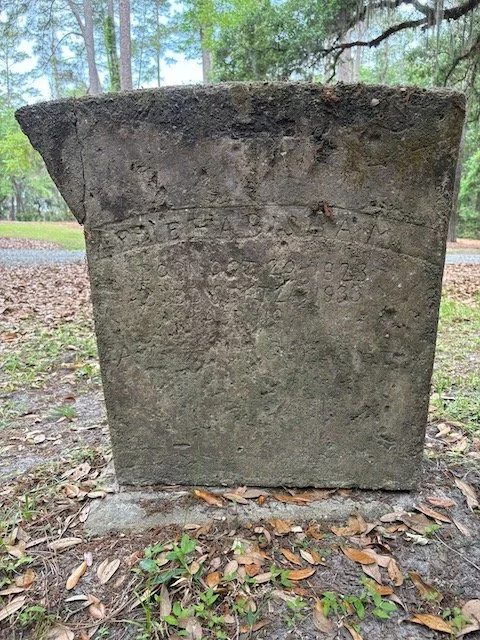
The names recorded on the visible headstones tell the story of the Gullah-Geechee Reconstruction and Autonomy. These families transitioned from laborers to landowners and community leaders.
Thomas B. Geddes (d. 1916)
The oldest recorded headstone. Burial at age 27, marking the first generation of free-born Gullah-Geechee youth.
Jerry White (d. 1924)
Jerry White represents the first generation of African Americans to experience full freedom in the Lowcountry. His burial here established the site as a community landmark.
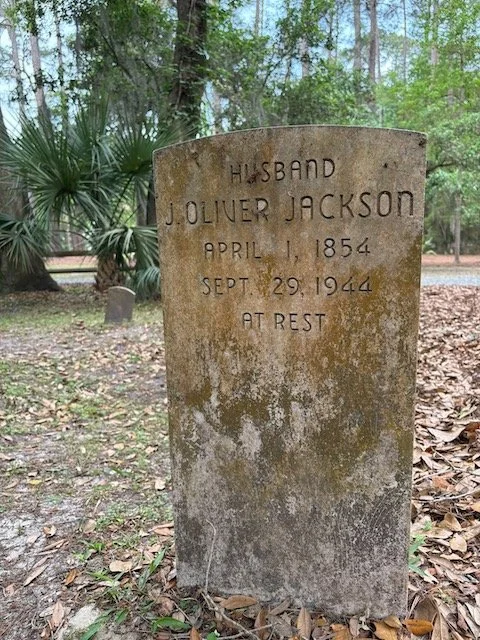
J. Oliver Jackson (1854–1944)
Born into slavery and passing away during World War II, Jackson’s life is a testament to the "Great Century" of Bluffton history. His well-crafted stone suggests a patriarch of significant social standing.
The Horton, Basham, and Brown Lineages (1933–1966)
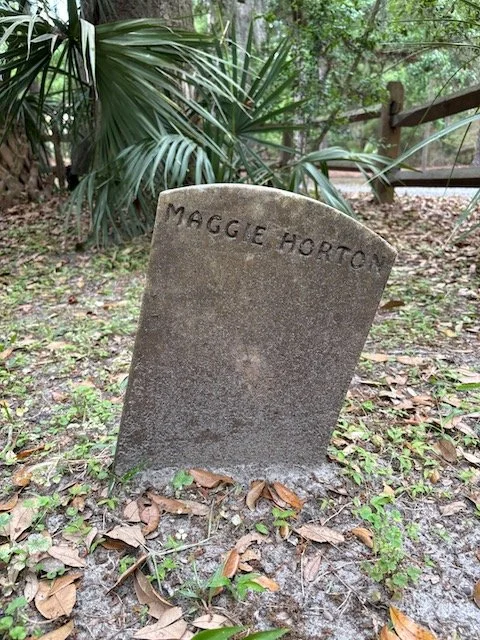
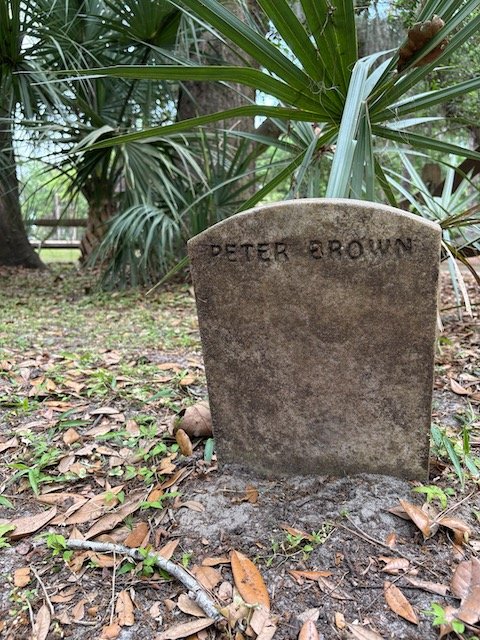
These names represent the backbone of the Pritchardville/Bluffton community. Maggie Horton and Peter Brown were siblings. The 1944 death of Horton and the 1966 death of Brown show that even as the modern world approached, the traditional ties to the Rose Dhu soil remained unbroken.
Bibliography
Trinkley, Michael. Archaeology at Rose Dhu Plantation. Chicora Foundation.
Rowland, L.S. History of Beaufort County, Vol. 1.
National Archives. Records of the Direct Tax Commission for SC.
Peeples, Robert E.H. Tales of Ante Bellum Island Families.